
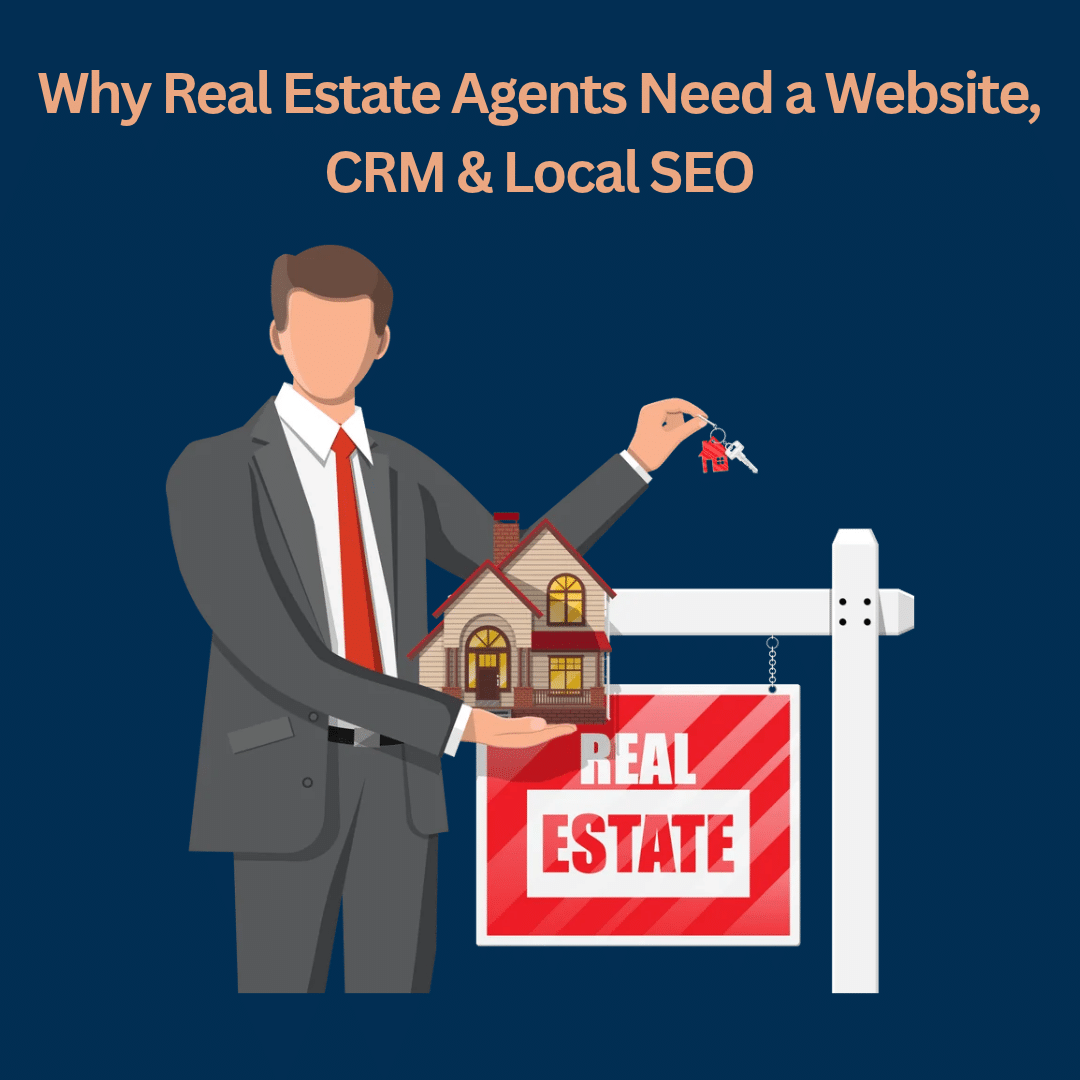
Why real estate agents need more than a website to grow locally.
A strong real estate business needs a clear digital front door, a dependable way to manage enquiries and a genuine local presence that helps people choose you when they are ready to move.
Your website should make your real estate identity easy to understand.
Buyers and sellers are not only looking for listings. They are deciding whether they trust the person behind the website. Your website should clearly show who you serve, the communities you understand, the services you provide and the next step a visitor should take.
A custom real estate website gives you room to present your own brand, neighbourhood knowledge, featured listings, buyer or seller resources, reviews and a clear contact path. It should be mobile-responsive, fast to navigate and built around the way your business wins work.
A CRM helps turn interest into organized follow-up.
When a visitor requests a showing, asks for a valuation or contacts your team, the opportunity should not live only in an email inbox. A CRM gives you a central place to see contacts, pipeline activity, tasks, appointments and follow-up.
Capture
Connect forms and enquiries to a clear contact record instead of relying on manual copy-and-paste.
Follow through
Use tasks, appointments, pipeline stages and automation to make the next action visible.
See the picture
Review lead, conversion and website activity so your marketing decisions are based on more than guesswork.
CDT can connect a real estate website with ClientConnect CRM and the broader CDT Growth workspace.
Local SEO and Google Maps optimisation help your business become easier to verify and understand.
Local visibility is not about buying a top placement. Google says local results are primarily influenced by relevance, distance and prominence. A complete, accurate business presence can help Google understand what the business does and where it operates, but no agency can guarantee a Maps ranking.
For a real estate professional, the practical work includes accurate business details, a compliant and verified Google Business Profile, useful local service pages, neighbourhood content, reviews earned through good service and a website that gives visitors clear answers.
Our SEO and local SEO services focus on the website and visibility foundation behind that work. We also help businesses understand why an accurate Google Business Profile matters through our guide on showing up on Google Maps.
A practical growth plan for a real estate agent or team.
Clarify the business message
Define your market, ideal clients, services and the action you want visitors to take first.
Build the connected website
Create an individual real estate website with the pages, listings approach and lead capture your business needs.
Grow visibility and follow-up
Add CRM, local SEO, social media and digital marketing support in the order that creates the clearest value.
FAQ: Real estate websites, CRM and local marketing
Why does a real estate agent need a website and CRM?
A website helps an agent explain their brand, markets and services, while a CRM helps the business respond to, organize and follow up with enquiries. Connecting the two gives the team a clearer path from a visitor action to a managed opportunity.
Does local SEO help real estate agents appear on Google Maps?
Local SEO can support a real estate business’s local visibility when it is combined with an accurate, verified Google Business Profile, helpful local website content, consistent business information and genuine customer reviews. Google determines local results using factors including relevance, distance and prominence, so no provider can guarantee a Maps ranking.
Should a real estate agent create Google Business Profiles for every city they serve?
No. A business should use accurate real-world business information and follow Google Business Profile guidelines. Creating profiles for locations where the business is not genuinely established can create policy and visibility problems. Agents can instead build useful service-area and community content for the markets they serve.
What social media content should a real estate agent share?
Useful social content can include new listings, market updates, neighbourhood guides, educational tips, local events, client-focused stories and clear next steps to contact the agent. The best mix depends on the agent’s market, audience and goals.
Can CDT help with a real estate website, CRM and local SEO?
Yes. CDT builds custom real estate websites and can connect ClientConnect CRM, local SEO tools, search optimization, social media marketing and broader CDT Growth tools based on the needs of the agent, team or brokerage.
How can community involvement help a real estate agent’s marketing?
Community involvement gives an agent useful, genuine topics to share, such as local events, neighbourhood resources, partnerships and market knowledge. It should be authentic and helpful rather than created only to obtain links or manipulate search rankings.
Let’s connect the website, lead handling and local visibility your real estate business needs next.
We will help you map a custom real estate website, CRM, local SEO and digital marketing plan around your business, market and next stage of growth.




Social media works better when it supports real local knowledge.
Social media is not only a place to post a new listing. It is a chance to show the market knowledge, people and community connection behind your real estate business. The strongest content is useful to the people you want to serve.
Share helpful market context
Explain local trends in plain language, answer common buyer or seller questions and direct people to deeper website resources.
Show community participation
Highlight genuine local events, partnerships, neighbourhood resources and causes you support. Authentic participation builds stronger content than generic promotion.
Give each post a purpose
Use a clear next step: read a guide, request a valuation, book a consultation or explore an area page. Connect activity back to a useful page on your website.
CDT can help plan and manage social media marketing that supports your website, campaigns and lead-generation goals.